
You protect yourself when paying a Chinese supplier by using verified payment structures, milestone-based disbursement, bank-account identity matching, third-party inspections, and document-controlled transactions instead of trust-based transfers.
Risk is minimized when payments are tied to legal verification, production milestones, and independent validation, not supplier promises or urgency-driven decisions.
More than 62% of first-time importers who lose money in China trade don’t lose it because of bad products — they lose it because of wrong payment structures. In transactions under $25,000, payment fraud and non-performance risks statistically exceed logistics and quality risks combined.
One wrong wire transfer can eliminate 100% of your capital in seconds, with recovery probability close to 0% due to cross-border enforcement barriers. China sourcing is not inherently dangerous — unstructured payments are. This article breaks down the exact financial, legal, and operational mechanisms that separate secure transactions from irreversible losses, and shows how professional importers structure payments as control systems, not trust gestures.
Which payment methods are safest when paying a Chinese supplier
Choosing the right payment method is a core element of transaction risk management in China trade. Traditional T/T wire transfers remain common, but statistically represent the highest exposure to counterparty risk, especially when combined with high upfront percentages.
In contrast, Alibaba Trade Assurance introduces a layer of platform-based escrow protection, where funds are conditionally released only after contractual performance validation. This mechanism significantly reduces fraud probability in transactions below $50,000 and for standardized products.

Letters of Credit (L/C) remain the gold standard for financial risk mitigation in contracts exceeding $100,000, as they involve bank-level compliance verification, document control, and conditional payment triggers tied to shipping documents and Incoterms.
Independent escrow services function as third-party payment custodians, offering controlled fund release based on predefined milestones and delivery confirmations.
Strategically combining these instruments with proper contract structuring, supplier verification, and cost modeling that includes logistics, VAT, and the customs duty on import of goods from China. creates a layered protection system that aligns financial security with operational efficiency and regulatory compliance.
Why paying 100% upfront is the biggest risk in China trade
Paying 100% upfront creates maximum exposure to financial loss risk and removes all leverage mechanisms from the buyer’s side. Once funds are transferred, the supplier holds full liquidity control, while the buyer has no contractual enforcement power tied to payment.
In high-risk sourcing regions, this structure enables non-performance fraud, ghost manufacturing, and factory substitution schemes, where production is either never started or outsourced to non-compliant subcontractors. Statistically, transactions with 100% prepayment show significantly higher failure rates in orders below $20,000, where legal recovery costs exceed the value of the shipment.
Psychological manipulation is also a common factor. Suppliers often use pressure tactics, such as false production slot scarcity, artificial urgency, and fabricated raw material price hikes to force immediate payment. Fake discount structures like “15% instant rebate for full prepayment” are frequently used to override rational risk assessment.
These strategies exploit cognitive bias and time pressure rather than commercial logic. From a risk management perspective, full prepayment eliminates performance-based incentives, making it structurally incompatible with secure international procurement models.
How to structure milestone payments to reduce risk
Structuring payments through milestone-based disbursement models is one of the most effective forms of financial risk control in China sourcing. Models such as 30/40/30 or 30/70 create a direct link between capital release and operational performance, ensuring that suppliers remain financially incentivized throughout the production cycle.
The first 30% deposit functions as production activation capital, covering raw materials and initial labor, while preserving buyer leverage. The mid-stage 40% tranche is strategically tied to production completion, tooling finalization, or internal QC confirmation, creating a checkpoint for process compliance verification.
The final 30% balance payment should be strictly linked to independent quality control, not supplier declarations. This structure transforms payments into control instruments, not just financial transfers. When combined with documented milestones, contractual triggers, and third-party inspection reports, milestone payments become part of a broader transaction governance system.
Professionally structured payment models are often designed on-site during factory visits, supplier audits, and negotiations that require physical presence, regulatory understanding, and even logistical access enabled through business travel documentation such as a Chinese visa, ensuring proper verification, accountability, and enforceable control mechanisms.
How to verify that you are paying the real factory — not a middleman
Supplier identity verification is a critical component of supply chain due diligence and financial fraud prevention in China trade. Many payment losses occur not because the supplier fails to deliver, but because the buyer unknowingly transfers funds to a non-manufacturing entity operating as a disguised intermediary.
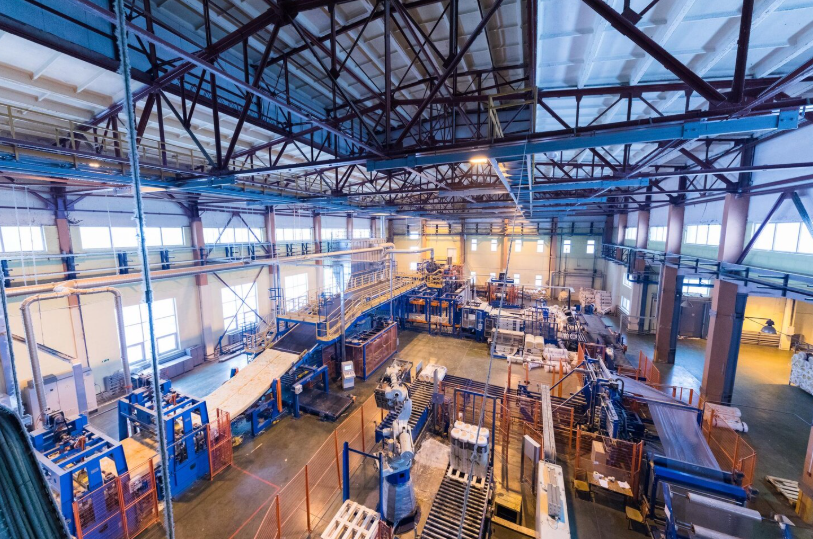
This creates structural misrepresentation risk, where the contractual counterparty does not control production capacity, quality systems, or logistics execution.
Professional verification begins with corporate registry validation, business license authentication, and bank account ownership confirmation, ensuring that the receiving entity is legally authorized to operate as a manufacturer.
A key control mechanism is company name matching between the contract, invoice, company license, and beneficiary bank details. Any discrepancy introduces identity fragmentation risk.
Additional red flags include personal bank accounts, offshore intermediaries, unexplained third-party payment requests, and last-minute beneficiary changes.
From a compliance perspective, mismatched payment structures violate basic KYC principles and undermine enforceability. Verifying the real factory is not just a sourcing step, but a transaction security protocol that directly protects capital, production continuity, and contractual enforceability across the entire supply chain.
Why the supplier’s bank account must match the company license
One of the most common payment failures in China trade comes from ignoring the legal identity alignment between the supplier’s bank account and the registered company license. When funds are sent to an entity that does not legally match the contracted supplier, the transaction loses juridical traceability, making recovery almost impossible in dispute scenarios.
Even small discrepancies in registered company names, punctuation, or legal entity structure can create enforcement gaps that expose buyers to total capital loss.
Fraud cases frequently involve redirection of payments to related trading companies, personal accounts, or offshore entities that have no legal obligation to fulfill production or delivery. Once the payment is executed, contractual protections collapse due to non-aligned beneficiary identity.
Proper verification requires cross-checking the business license, stamped proforma invoice, contract entity name, and beneficiary bank information.
This process is especially sensitive when documentation is in Mandarin, where professional document translation China services are essential to avoid semantic errors, name inconsistencies, and legal misinterpretation. Matching the supplier’s legal identity across all payment and contract documents is not an administrative detail—it is a foundational layer of transaction security and enforceability.
How a proforma invoice protects you before sending money
A properly structured proforma invoice functions as a pre-contractual risk control document and a financial verification instrument before any funds are transferred. It creates transaction traceability by formally linking the buyer, supplier, product specifications, payment terms, and delivery conditions into a single legally referencable document.
Without a compliant proforma invoice, payments become unanchored transfers, detached from enforceable commercial obligations.
A professional PI must contain the exact legal company name, registered address, authorized company stamp, and consistent banking details, ensuring entity authentication.
Commercially, it must define product descriptions, HS classification, declared values, quantity tolerances, and packaging specifications, forming the basis for customs clearance, insurance underwriting, and contractual interpretation. Clear definition of Incoterms, delivery terms, and risk transfer points establishes logistics liability allocation and payment-trigger conditions.
From a financial perspective, the proforma invoice becomes the reference document for bank transfers, escrow releases, and dispute resolution. It transforms a payment into a structured commercial transaction rather than a blind capital transfer, providing legal clarity, operational alignment, and enforceable accountability before money ever leaves the buyer’s account.
How quality control inspections protect your payment
Quality control inspections function as a financial risk firewall in international sourcing, transforming payment from a trust-based action into a verification-based release mechanism.
Without pre-shipment inspection, buyers operate under information asymmetry, where production quality, specification compliance, and packaging standards remain unverified at the moment of payment. This creates blind payment exposure, where funds are released without evidence of contractual fulfillment.

Independent inspections introduce objective compliance validation through dimensional checks, functional testing, labeling verification, and packaging conformity audits.
These controls link payment eligibility to measurable production outputs, not supplier declarations. Structurally, inspections convert payments into conditional financial events, rather than unconditional transfers.
In professional sourcing models, QC processes are integrated into the payment architecture, where final balances are contractually tied to third-party inspection reports.
This system is often managed through localized networks, including professional sourcing firms and china import agents, who coordinate factory access, documentation flow, and verification protocols.
By embedding inspections into the payment structure, buyers create enforceable checkpoints that protect capital, reduce dispute risk, and maintain leverage throughout the transaction lifecycle.
What to do if a supplier suddenly changes payment details
A sudden change in payment details represents one of the highest-risk indicators in international trade and is classified as a critical fraud signal within transaction risk frameworks. Structurally, legitimate manufacturers do not change beneficiary accounts mid-transaction without documented corporate, banking, or regulatory justification.
When such a change occurs, the transaction enters a high-alert risk state that requires immediate operational suspension.
The first step is payment freeze protocol activation, where all transfers are halted until full verification is completed. This includes legal entity revalidation, bank ownership confirmation, and cross-checking corporate registration records against the newly provided beneficiary details.
Any mismatch introduces identity substitution risk, which is a common mechanism in payment diversion fraud schemes. In many cases, these changes are driven by account compromise attacks, internal collusion, or external interception of communication channels.
Operationally, buyers must implement out-of-band verification, meaning confirmation through independent communication channels such as verified phone numbers, corporate emails, and legal representatives, rather than the same email thread used for payment instructions. Contractually, any change must be supported by amended invoices, updated company stamps, and legally valid documentation.
From a risk governance perspective, payment detail changes invalidate existing transaction structures. Until the new data is fully authenticated, any transfer represents uncontrolled capital exposure. Treating such changes as routine administrative updates is one of the most common causes of irreversible financial loss.
How working with a China import agent protects your money
Working with a professional China import agent creates a structural risk barrier between your capital and the operational uncertainties of cross-border sourcing. Instead of direct exposure to suppliers, buyers operate through a controlled transaction architecture, where verification, payment flow, and production oversight are institutionally managed.
This transforms sourcing from a trust-based model into a process-driven risk system.
An import agent provides local due diligence infrastructure, including factory verification, legal entity checks, on-site audits, and production capability validation. This reduces supplier misrepresentation risk and eliminates blind contracting with unverified entities.
Financially, agents structure payments through controlled disbursement models, milestone frameworks, and verified beneficiary accounts, ensuring that funds are only released when predefined operational conditions are met.
Negotiation leverage is also structurally improved. Local representation enables price normalization, contract optimization, and elimination of artificial markups that often result from information asymmetry. Operationally, agents integrate quality control, logistics coordination, and documentation management into a single governance layer, preventing fragmented risk exposure across multiple parties.
Most importantly, the agent becomes a risk buffer entity that absorbs complexity on behalf of the buyer. Instead of managing legal compliance, cultural negotiation dynamics, language barriers, and verification processes independently, the buyer operates through a centralized control structure.
This significantly reduces capital exposure probability, operational uncertainty, and fraud vulnerability, while increasing transaction transparency, enforceability, and long-term sourcing stability.
Read also:
What does a China agent do
Import Direct from China: How It Works and Why It Matters
How to find reliable suppliers in China